


9 min read
What 'Your Business, Systemised' Really Means
Search "systemise your business" and every result tells you the same thing: write down your procedures. Document how you do the work. Build an operations manual so the business doesn't live in your head. That's the classic advice, and for a business with no written process at all, it's a fair start.
But if you came up through a technical discipline, that advice probably doesn't match your problem. You're an engineer, a lab owner, a calibration specialist, a fabricator. You already have systems. Your job management platform tracks every job. Your LIMS holds your test records. Your CRM knows your clients. You don't have a documentation gap.
You have a different problem, and almost nobody writes about it.
The real gap: your tools don't talk to each other
Here is what's actually happening in most technical businesses we look at. The software is all there. It's just running in separate boxes, none of them connected.
Your job management system knows exactly who your best clients are, which jobs were most profitable, and which quotes turned into work. Your marketing has never heard of any of it. Your website was built once, three years ago, and has had nothing to do with your operation since. Your accreditations and your real capability live in a folder somewhere, not on the page where a buyer can find them.
So the business runs from whoever happens to be in the room. The person who remembers which clients pay on time. The person who knows the quote-to-win pattern by feel. The marketing that gets done in a burst when someone has a spare afternoon, then goes quiet for two months.
That isn't a missing procedure. It's missing connection.
Systemising isn't writing down how you work. It's your actual tools working as one, so the business runs from real data instead of from memory.
Two different meanings of "systemised"
It's worth separating the two clearly, because the word gets used for both and they solve different problems.
The documentation meaning
This is the operations-manual version. You write down how each task is done so anyone can follow it. It's genuinely useful, especially if a business lives entirely in the founder's head. But it's a description of the work. It sits in a document. It doesn't do anything on its own.
The connected-operation meaning
This is the version we mean. Your tools working as one connected operation. The data your business already generates, jobs, quotes, test records, client history, actually informing the work that grows the business, instead of sitting unused in a system that only one part of the company ever opens.
The first is about writing things down. The second is about your software actually talking, so a decision can be made from what's true rather than from what someone half-remembers.
What "one connected operation" looks like in plain terms
Forget the technical detail for a moment. Here's the outcome.
Your operation knows which clients and which jobs are worth more. That knowledge reaches your marketing, so the people you most want to reach see work that looks like the work they need. The capability you've spent a career building, your methods, your accreditations, the projects you're proud of, becomes visible to the buyers checking whether to trust you. And it stays consistent, month after month, instead of depending on whether anyone had a spare afternoon.
None of that requires you to become the marketing person or the technology person. Those gaps aren't a failing. Keeping up with technology is a full-time job on its own, and it was never the job you trained for.
Why marketing is the first module
This is where we start, and there's a plain reason for it.
Marketing is the most visible place your tools failing to talk shows up. It's where the disconnect costs you, because the people choosing who to trust never see how good your work actually is. So it's also the clearest place to prove the tools can talk.
We build the software that runs your marketing as one connected system, informed by what your operation already knows, and tuned by a real person who owns the result. It's the first module of the larger idea: your business, systemised. Broader connection across your operation is the direction we're built to grow into, not something we'd claim is delivered on day one.
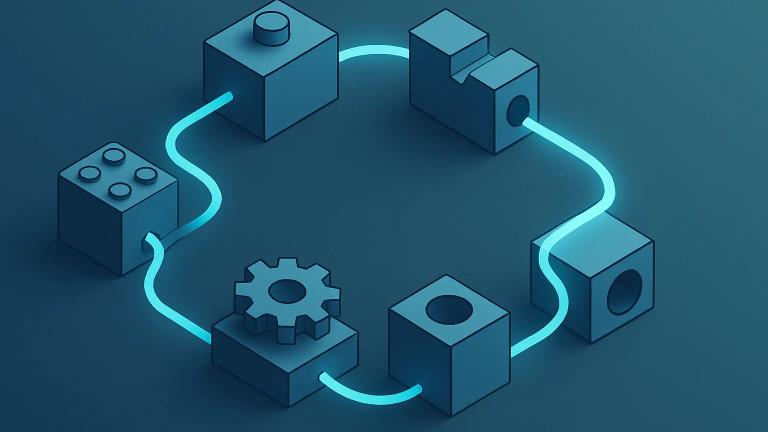
The point of starting here is honesty. You can see it working before you trust it with anything more. Our own marketing runs on the same engine we'd run for you, which is the only proof that matters: the work is real, not a promise on a slide.
The shift in plain language
The old advice says: document your business so it doesn't depend on you.
The shift that actually moves a technical business is different. It says: connect your business so it runs from what's true. Your tools working as one. Your data informing your decisions. Your real capability visible to the people choosing who to trust.
That's what "your business, systemised" means here. Not a folder of procedures. A connected operation, so you can focus on what you do best.


